

As an Amazon Associate I earn from qualifying purchases.
If you let residential property in England, smoke and carbon monoxide alarms are a legal duty rather than a recommendation. The rules changed on 1 October 2022, and a good deal of what is still written about them online describes the position before that date.
It's crucial to prioritise the safety of your tenants by installing smoke and carbon monoxide detectors in your rented residential properties. These essential safety measures are required by law to ensure the well-being of those living in your properties.
The smoke alarm duty is counted per storey, not per room. Regulation 4 requires an alarm on each storey of the premises on which there is a room used wholly or partly as living accommodation, so a three storey house needs three alarms, not one in every lounge, kitchen and bathroom.
Carbon monoxide alarms work the other way round, because they are counted per room. Since 1 October 2022 one has been required in any room used wholly or partly as living accommodation that contains a fixed combustion appliance other than a gas cooker. Before that date the duty covered solid fuel appliances only, which is why older guidance mentions log burners and nothing else. The change was made by the Smoke and Carbon Monoxide Alarm (Amendment) Regulations 2022, amending regulation 4 of the 2015 Regulations.
You have to check the alarms are working on the day a new tenancy starts, and repair or replace any alarm a tenant reports as faulty. Where a landlord does not comply with a remedial notice, the local housing authority can impose a penalty charge, which regulation 8 caps at £5,000.
What follows is what the regulations actually require, which alarm belongs where, and where the duty stops.
What the regulations require in England
Two separate duties sit in regulation 4, and they are counted differently. Getting them the wrong way round is the most common mistake in landlord guidance.
| Duty | Counted by | The statutory test |
|---|---|---|
| Smoke alarm | Storey | One on each storey of the premises on which there is a room used wholly or partly as living accommodation |
| Carbon monoxide alarm | Room | One in any room used wholly or partly as living accommodation that contains a fixed combustion appliance other than a gas cooker |
So a two storey house with a hall, a lounge, a kitchen, two bedrooms and a bathroom needs two smoke alarms, one per storey, not one in each room. A hall or landing counts as a room used as living accommodation for the purposes of the test, which is why the usual arrangement is one in the hall and one on the landing. The regulations do not define "storey", and the department's stated view is that a mezzanine floor is not a storey.
For flats, at least one smoke alarm must be installed on each storey.
Carbon monoxide alarms follow the appliance. A room needs one only if it contains a fixed combustion appliance, such as a gas or oil boiler, a gas fire or a log burner. Gas cookers are the one carve-out written into the regulation, and the department's view is that a decorative fireplace which cannot be used is not a fixed combustion appliance.
Not every letting is caught. The regulations bite on a "specified tenancy", and the excluded categories include long leases, accommodation shared with the landlord or a member of the landlord's family, student halls of residence, hotels and refuges, care homes, hospitals and hospices, and low-cost ownership homes.
Wales, Scotland and Northern Ireland are different
The 2015 Regulations are an England instrument, and the government's own guidance on them is published as applying to England. Letting property in Wales puts you under a separate regime with stricter requirements, so applying the English rules there will leave you short.
In Wales the duty sits in the Renting Homes (Fitness for Human Habitation) (Wales) Regulations 2022, made under Part 4 of the Renting Homes (Wales) Act 2016 and applying from 1 December 2022. Two differences matter. Welsh smoke alarms must be connected to the mains electrical supply and interlinked with each other, where England accepts battery alarms. And the Welsh carbon monoxide test is any room containing a gas, oil or solid fuel burning appliance, which is worded differently from the English test. Failing either makes the dwelling unfit for human habitation rather than attracting the English penalty charge. The Welsh Government guidance for landlords is the place to check.
Scotland and Northern Ireland have their own separate rules again, which this page does not cover.
It's important to follow the manufacturer's instructions for placement and ensure that the alarms are in working order at the start of each new tenancy.
Installation and Placement
To properly install and place alarms, make sure you follow the manufacturer's instructions.
When installing smoke alarms, work storey by storey rather than room by room: one alarm on each storey that has a room used wholly or partly as living accommodation. A hall or landing counts for that purpose, and a mezzanine does not count as a separate storey.
If you have individual flats, make sure to have at least one smoke alarm on each storey.
As for carbon monoxide alarms, they must be fitted in every room used as living accommodation that contains a fixed combustion appliance other than a gas cooker. The regulations do not specify a type or a standard of alarm, only that one is fitted and that it works.
It's your responsibility as a landlord to check that the alarms are in working order at the start of a new tenancy.
Additionally, take prompt action to investigate and repair or replace any defective alarms reported by tenants.
Which type of smoke alarm, and where it goes
The regulations do not specify a sensing technology, only that an alarm has to be fitted and has to work. That leaves a decision nobody explains at the point of sale, and the four types on the shelf behave quite differently from each other.
| Type | How it detects | Where it suits | The drawback |
|---|---|---|---|
| Ionisation | A small radioactive source ionises the air in the chamber, and smoke disrupts the current | Fast, flaming fires | Nuisance alarms where cooking fumes or steam can reach it |
| Optical | Smoke particles scatter a light beam inside the chamber | Hallways and landings, where smouldering fires are the usual risk | Slower than ionisation on a clean, fast flaming fire |
| Heat | Senses a rise in temperature rather than smoke at all | Kitchens and garages, where a smoke alarm would cry wolf | Does nothing until a fire is already producing real heat |
| Multi-sensor | Combines more than one sensing method in a single unit | Hallways, landings and living rooms as a general purpose choice | Costs more per unit than a single sensor alarm |
For a let property the practical answer is usually optical or multi-sensor alarms along the escape route, meaning the hallway and the landing, with a heat alarm in the kitchen instead of a smoke alarm. Putting a smoke alarm in a kitchen is how tenants end up taking the battery out, and a disabled alarm is worse than no alarm at all, because everyone in the building assumes it is working.
On placement, follow the manufacturer's instructions, since that is what the regulations point you at. The pattern they generally describe is the middle of the ceiling, away from walls, light fittings, fans and vents, and never in a bathroom where steam will set it off. Alarms also need vacuuming out from time to time, because a chamber full of dust is a chamber full of false alarms.
Sealed ten year units are worth the extra on a rented property for a reason that has nothing to do with the sensing technology: there is no removable battery for anybody to borrow. The trade-off is that at the end of the ten years the whole alarm is replaced rather than a cell. Which carbon monoxide alarms are worth buying, and the standard they should state compliance with, is covered in the guide to choosing a carbon monoxide detector.
If you want a multi-sensor unit for the hall and landing rather than a plain optical alarm, this is the one to look at.
Best multi-sensor smoke alarm
FireAngel FP2620W2-R Pro Connected Smoke Alarm
- Thermoptek multi-sensor sensing, combining optical and thermal detection in one unit
- 10-year sealed, tamperproof Panasonic lithium battery with nothing to replace
- Wirelessly interlinks with up to 50 FireAngel Pro Connected or Wi-Safe 2 devices
- Certified to BS EN 14604:2005+AC:2008, with BSI Kitemark and LPCB approval
- Toast-proof sensor, so it can be sited nearer a kitchen than a plain optical alarm
- Five year manufacturer warranty
Pros
- No removable battery, so there is nothing for a tenant to borrow
- Covers both smouldering and fast flaming fires from a single unit
- States a specific standard on the product, which plenty of cheaper alarms do not
Cons
- Costs more per unit than a single-sensor optical alarm
- At the end of the ten years the whole alarm is replaced rather than a cell
- The interlink only earns its money if you fit more than one, and the smartphone alerts need the separate Pro Connected Gateway
The one to fit on the hall and landing of a let property if you want multi-sensor detection with a sealed battery. On a single-storey flat needing one alarm, a plain optical unit does the same statutory job for less, so the case for this rests on the interlink.
The best carbon monoxide alarm for landlords
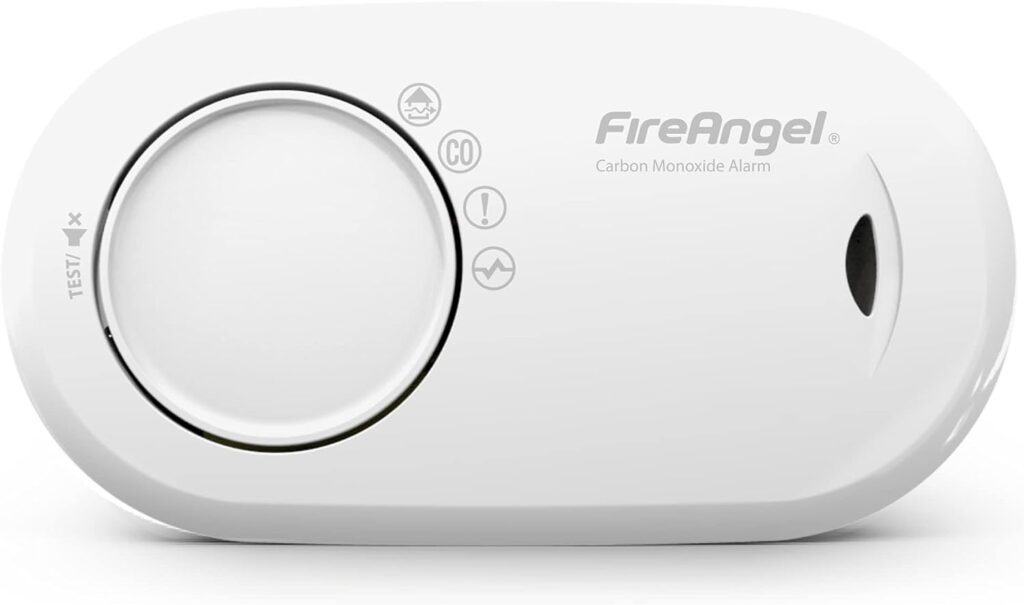
FireAngel FA3820 – Best carbon monoxide alarm for landlords
- 10 Year battery life - Sealed Unit
- CE & UKCA mark and has been designed to conform to the standards - BS EN 50291-1: 2008 and EN 50291-2: 2019
- Suitable for homes in England, Scotland and Wales, including rented properties
- Compact unit
- Easy to test
- Can be purchased either individually or as a pack of two
Buy Individually Now from AmazonBuy Now pack of two from Amazon
Best smoke alarm for Landlords
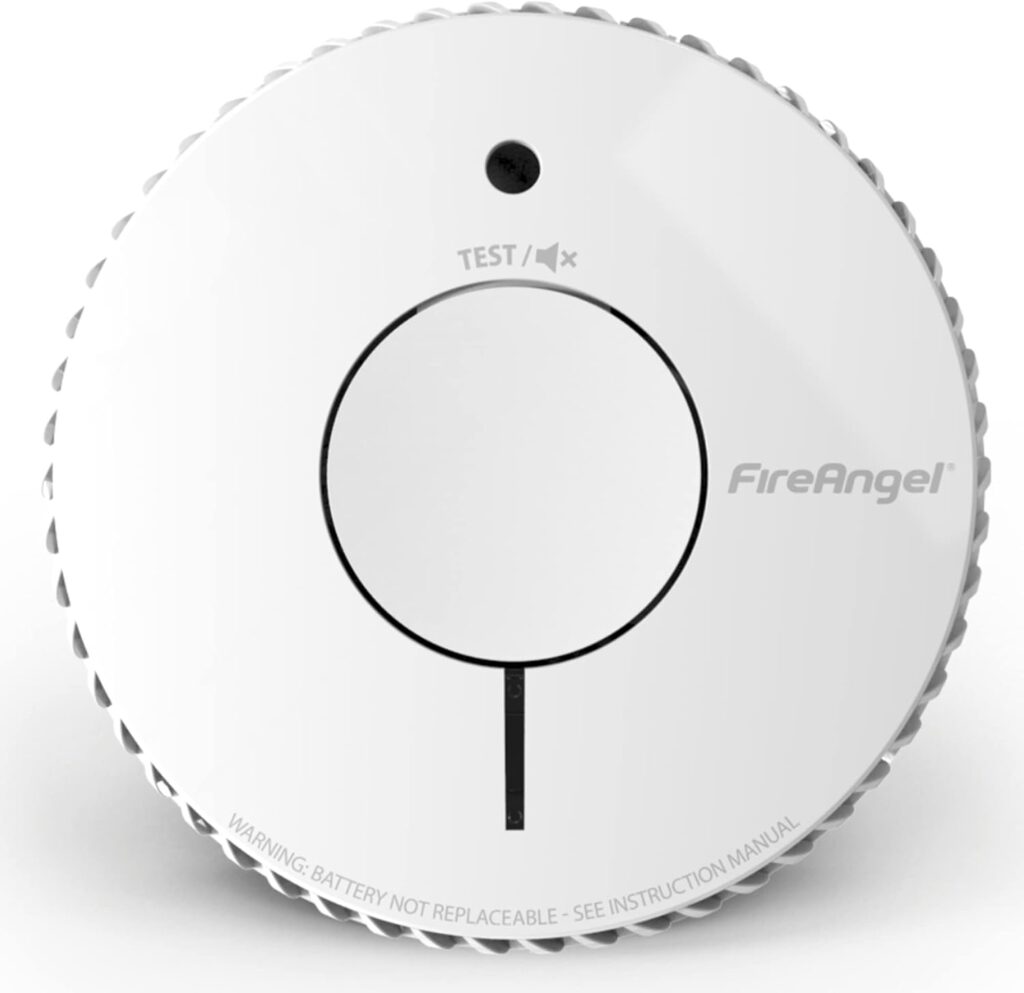
FireAngel Optical Smoke Alarm - FA6620-R – Best smoke alarm for Landlords
- Comes with a sealed, tamper-proof battery that lasts the lifetime of the alarm - 10 Years
- Utilises optical sensing technology for rapid detection of smoke in the alarm chamber
- Quiet test function to minimise disturbance when testing alarms
- Can be purchased either individually or as a pack of two
Buy Individually Now from AmazonBuy Twin pack Now from Amazon
Frequently Asked Questions
Are there any specific requirements for the type of smoke and carbon monoxide alarms that landlords must install?
No. The regulations do not specify a sensing technology or a British Standard for either alarm, only that one is fitted in the right place and is in working order. What the regulations do fix is where they go: one smoke alarm per storey with a room used as living accommodation, and a carbon monoxide alarm in any such room containing a fixed combustion appliance other than a gas cooker.
Are there any exemptions to the requirement of installing smoke and carbon monoxide alarms in rented residential accommodation?
Yes. The regulations apply to a "specified tenancy", and several categories sit outside it, including long leases, accommodation shared with the landlord or a member of the landlord's family, student halls of residence, hotels and refuges, care homes, hospitals and hospices, and low-cost ownership homes. If your letting is not in one of those categories, work on the basis that the duties apply.
Can gas cookers be exempt from the requirement of installing carbon monoxide alarms in rooms with fuel-burning appliances?
Yes, but only gas cookers. Regulation 4 refers to a fixed combustion appliance "other than a gas cooker", so a kitchen containing nothing but a gas cooker does not need a carbon monoxide alarm, while a kitchen containing a gas boiler does. On the wording, the exclusion does not extend to oil-fired or solid fuel range cookers.
Who is responsible for checking the alarms during the tenancy?
You are responsible for checking the alarms during the tenancy. It is important to regularly test and ensure that the smoke and carbon monoxide detectors are in working order to maintain the safety of the premises.
What are the consequences for landlords who fail to comply with the smoke and carbon monoxide detector requirements?
Where a local housing authority believes a landlord is in breach, it serves a remedial notice requiring the work to be done. If the landlord does not comply with that notice, the authority may impose a penalty charge, which regulation 8 caps at £5,000. The authority sets the amount, and a penalty charge notice can be appealed to the First-tier Tribunal.
Sources
- The Smoke and Carbon Monoxide Alarm (England) Regulations 2015, regulation 4, for the smoke alarm per storey duty and the carbon monoxide alarm per room duty.
- The Smoke and Carbon Monoxide Alarm (Amendment) Regulations 2022, which replaced "solid fuel burning combustion appliance" with "fixed combustion appliance other than a gas cooker" with effect from 1 October 2022.
- Regulation 8 of the 2015 Regulations, for the £5,000 cap on the penalty charge and the six week time limit on serving the notice.
- The government's question and answer booklet for landlords and tenants, published as applying to England, for the mezzanine point, the excluded tenancies and the decorative fireplace point.
- Welsh Government guidance on fitness of homes for human habitation, for the separate Welsh requirements.
This page sets out what the regulations say and is not legal advice. If you are deciding what a particular property needs, the wording of regulation 4 is the thing to work from. Sources checked on 8 October 2026.




0 Comments