
As an Amazon Associate I earn from qualifying purchases.
You are standing in a cold room, the radiator is cold at the top, and there is no bleed key anywhere in the house. The short answer is that you can probably do it with something you already own, and which thing depends entirely on the shape of the centre of the bleed valve.
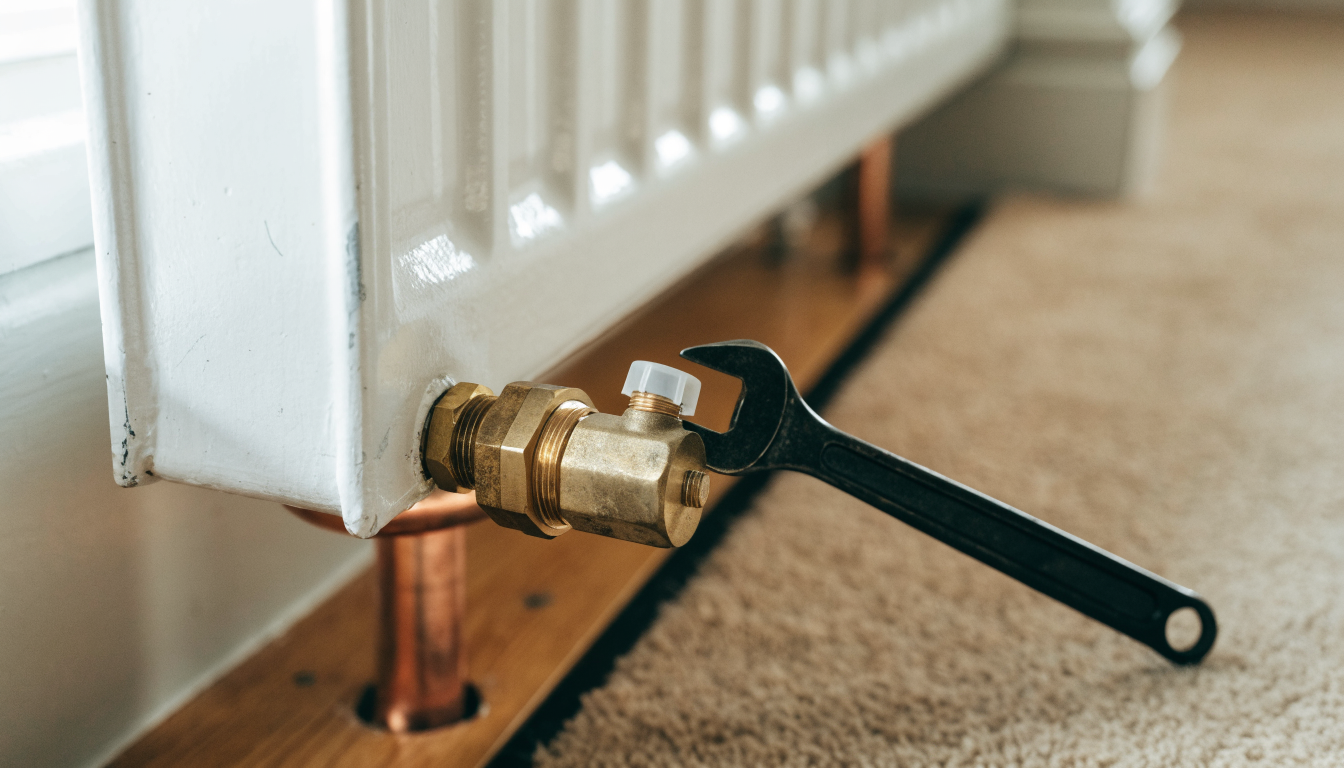
A flat-head screwdriver turns a slotted valve, and a lot of modern radiators have one. A small adjustable spanner will turn a raised square. An Allen key fits the hex vent used on some designer radiators and towel rails. Pliers will turn a square as well, and they are also the quickest way to ruin it.
That last point is the one the competing pages skip. I spent 16 years running plumbers merchants across the south of the UK, and people did not come back to the counter because a screwdriver had failed them. They came back with a rounded-off bleed valve, at which point a five minute job had become a new valve, a drained radiator and an afternoon.
First, make sure air is actually the problem
Bleeding fixes one specific fault and does nothing at all for the others. Put your hand on the radiator with the heating running and feel where the cold is. It takes ten seconds and it will save you going through the kitchen drawer for nothing.
If it is cold anywhere other than the top, stop here and read our guide to common radiator problems instead, because the tool you are looking for is not going to help. If it is a thermostatic head you suspect, how a TRV actually works explains the stuck pin, which is a thirty second fix.
And if you do have a key, or you are happy to buy one before you start, you want the full procedure rather than this page: how to bleed a radiator covers the order to do them in, what the black water means and what to do when bleeding does not fix it. This page is only about getting the valve open without the proper tool.
Look at the valve before you pick up any tool
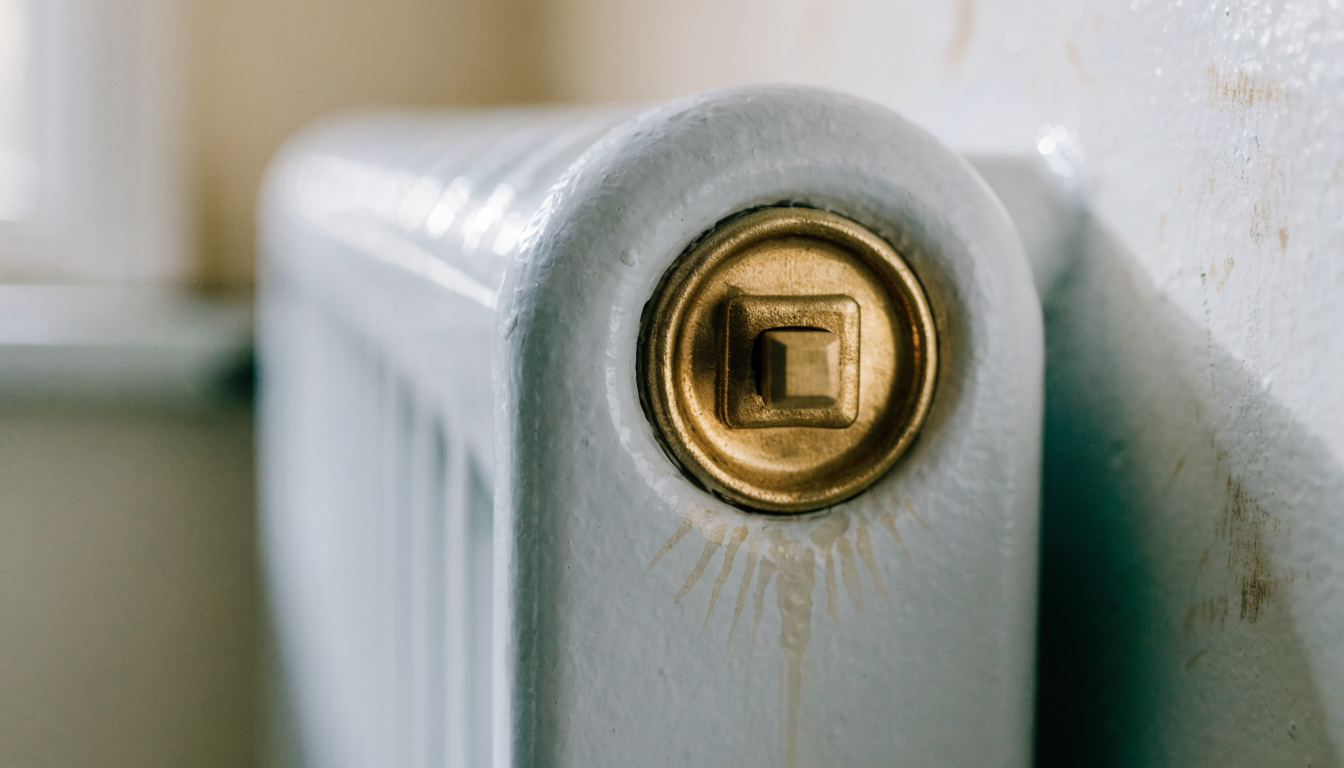
Everything else follows from this. The bleed point is a small brass fitting at the highest corner of the radiator, usually on the end cap and usually opposite the pipe connections. On a towel rail or a column radiator it can be on the back or the side, so look for the highest point that is not a pipe.
There are three things you might find in the middle of it.
- A square spindle or a square recess. This is the UK standard and it is what a clock-type bleed key fits. Most are 5mm across the flats. Viessmann's own guide points out that a radiator of around thirty years old may need a larger clock key, somewhere between sizes eight and twelve, which is why a modern key sometimes spins uselessly on an old rad.
- A slot cut across it. Plenty of modern panel radiators have a slot, either on its own or cut across the square. This is the good outcome: a screwdriver is the intended tool, not a workaround.
- A hexagonal socket. Common on designer radiators and contemporary towel rails, which often ship with a small Allen key that ends up in the same drawer as the instructions.
Get a torch on it and look properly. A square with a slot across it reads as a plain square at arm's length, and a fair number of people reach for pliers when a screwdriver would have done.
What works, ranked from safest to riskiest
The rule underneath all four is the same: a loose tool does the damage. If it rocks on the fitting, it is turning the corners rather than the flats, and the corners are where soft brass gives up first.
What will not work, so you can stop trying
| What people try | What actually happens |
|---|---|
| An adjustable spanner on the whole valve body | You unscrew the entire bleed valve out of the radiator. What comes out then is not a dribble, it is the contents of the radiator, and it is black. |
| A coin, a door key or a butter knife | Too thick or too soft for the slot. At best it slips, at worst it burrs the edges of the slot so a screwdriver no longer bites either. |
| Taking the thermostatic head off | Exposes the valve pin, which controls flow into the radiator. It has nothing to do with venting air and will not release any. |
| Turning the heating up or running the pump harder | Air does not compress away. It moves around the system and comes back to the top of the same radiator. |
| A screwdriver on a plain square with no slot | It cannot engage two faces, so it rides on one corner and rounds it. This is the single most common way the valve gets damaged. |
Opening it without making a mess
Once you have something that fits, the job is short. The two things that go wrong are doing it while the system is hot, and opening the valve too far.
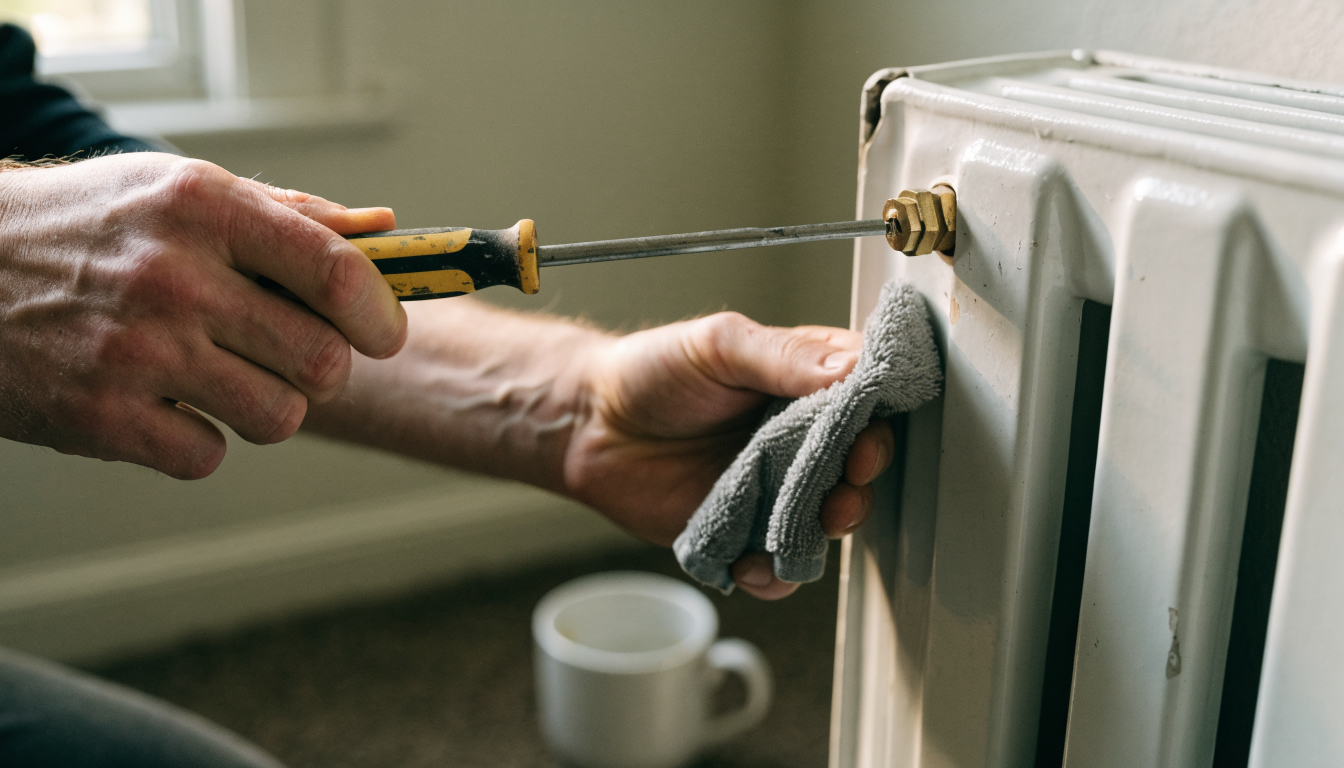
If the tool slips before anything happens, stop. A valve that has been sitting untouched for fifteen years can be stiff with limescale, and forcing a loose-fitting tool onto it is how the square disappears. That one is worth waiting for a proper key.
Check the boiler pressure before you walk away
Bleeding lets water out, so on a combi or any other sealed system the pressure drops. Do two or three radiators and it can fall far enough that the boiler will not fire, which is the "I bled the radiators and now I have no heating" phone call.
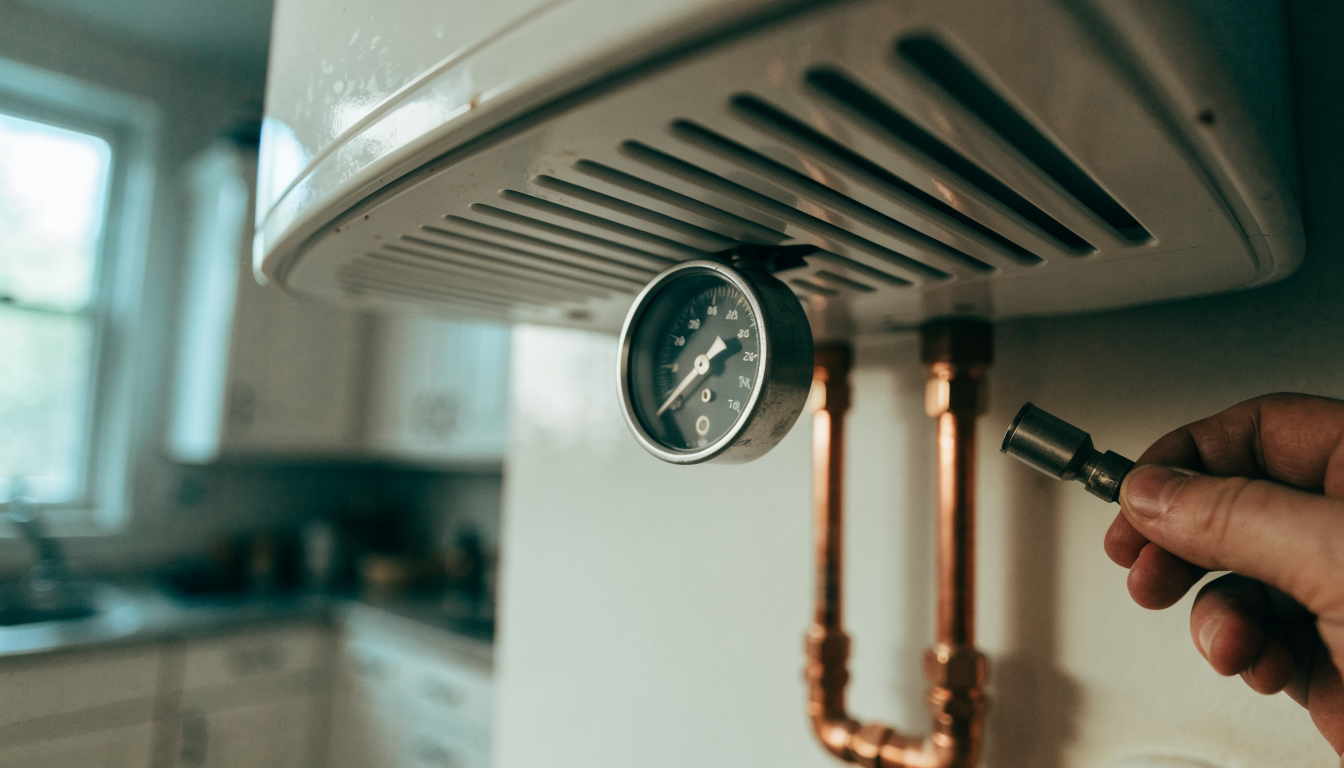
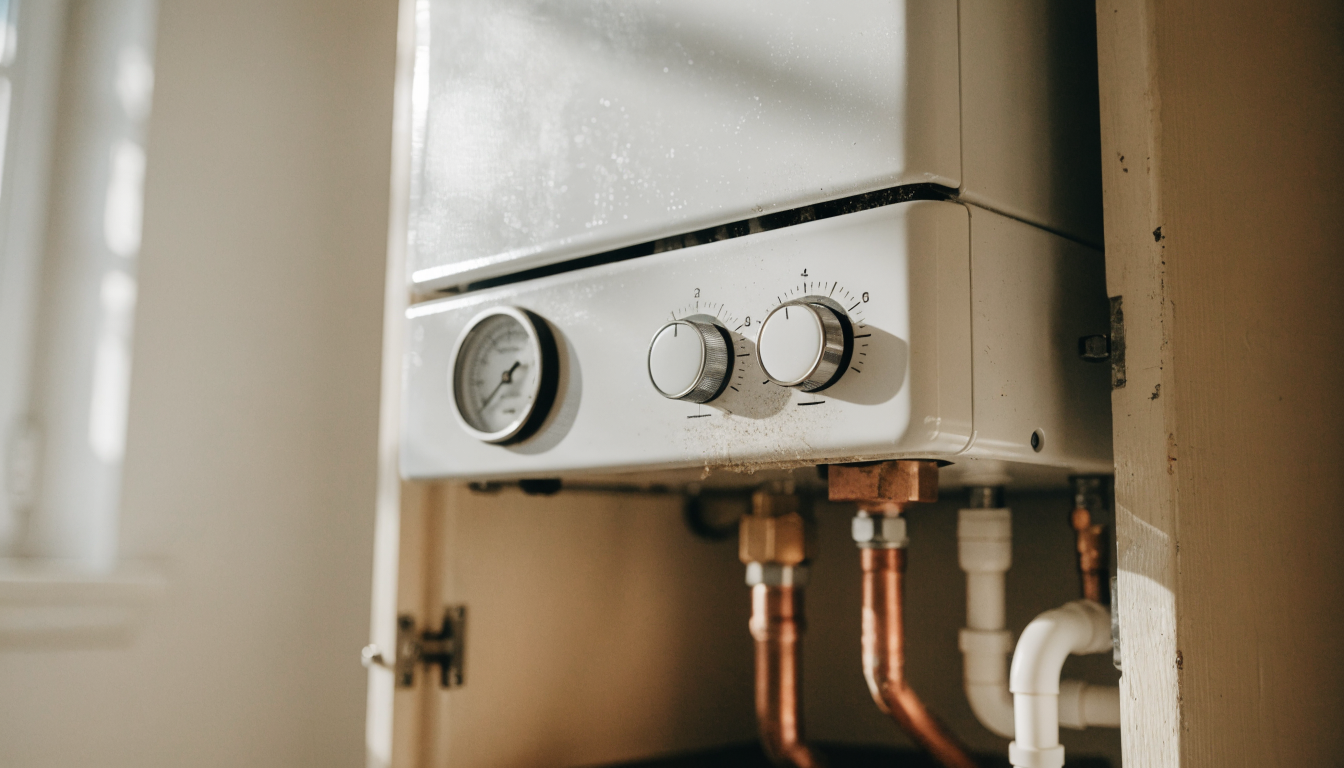
Look at the gauge on the front of the boiler with the system cold. You want roughly 1.0 to 1.5 bar. If it has dropped below about 1 bar, top it up with the filling loop, which is covered step by step in how to repressurise a boiler. If you have a tank in the loft rather than a pressure gauge, there is nothing to do: the system refills itself by gravity.
One thing worth knowing if the water that came out was properly black: that is magnetite, and it means the system is corroding because it has no effective inhibitor left in it. Bleeding is not the fix for that. Our guide to central heating inhibitor covers how much a system needs and why it has to be replaced after any drain-down.
Buy a key and keep it with the meter
All of the above is for the person who needs the radiator warm tonight. If you are not in a hurry, the honest recommendation is simply to buy one, because a bleed key costs less than a pint and it removes this entire problem permanently.
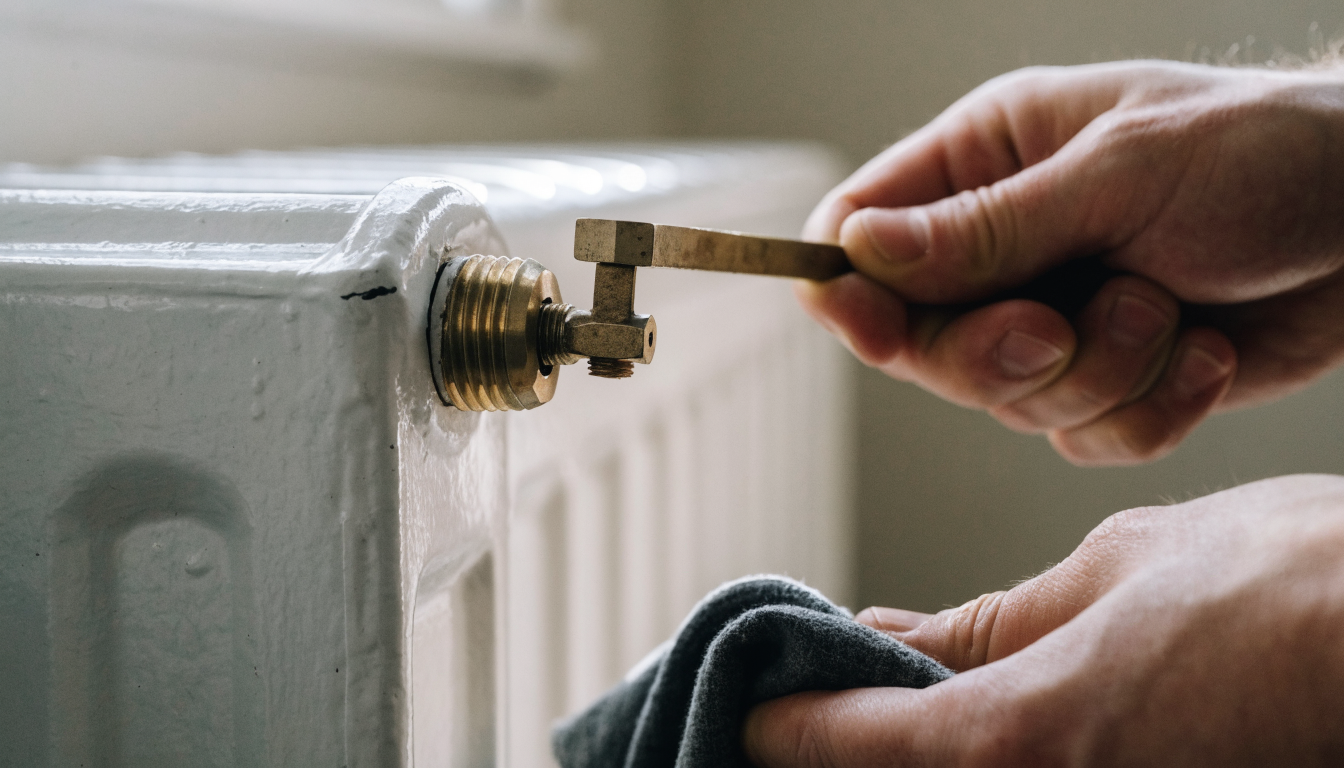
Two things worth doing when you buy. Get a multi-size set rather than a single key, because houses rarely have one type of radiator throughout and the old rad in the back bedroom is the one that will need the odd size. And put it somewhere you will find it, which realistically means taped inside the meter cupboard or the boiler cupboard, not in the drawer everything else disappears into.
Multi-size radiator bleed key set on AmazonIf you would rather have one thing that covers more than radiators, the combined keys that add a gas or electricity meter box key and a square cabinet key to the radiator sizes are the sensible version of the same purchase, and they live on a keyring.
Combined radiator and meter box key set on AmazonEvery plumbers merchant, DIY shed and decent hardware shop has them on the counter as well, so if you are passing a Screwfix or a Toolstation this week it is a thirty second errand. Buy two. Everyone loses the first one.
Frequently asked questions
What can you use instead of a radiator bleed key?
A flat-head screwdriver if the valve has a slot, an Allen key if it has a hex socket, and a small adjustable spanner if it has a raised square. Pliers work on a square too but grip the corners rather than the flats, so they are the option most likely to round it off. Nothing else in a normal household toolbox engages the fitting properly.
Can I bleed a radiator with a screwdriver?
Yes, provided the bleed valve has a slot in it, which many modern panel radiators do. Look closely first, because some valves have a slot cut across the square and it is easy to miss. On a plain square with no slot, a screwdriver cannot engage two faces and will damage the corners instead of turning it.
Can you bleed a radiator while the heating is on?
You should not. On a sealed system the water is hot and under pressure, so opening the valve sends it out with real force. Run the heating first to drive the air to the top and work out which radiators are affected, then switch it off and give it twenty minutes to cool before you open anything.
Which radiator do I bleed first if my boiler is downstairs?
Start downstairs with the radiator furthest from the boiler and work back towards it, then do the same upstairs. Going the other way lets air still sitting in the downstairs pipework migrate upwards, so you end up doing the upstairs ones twice. The reasoning is set out in full in our main guide to bleeding a radiator.
Do I need to bleed all my radiators if I only bleed one?
No. If only one is cold at the top, only that one has air in it. Doing the whole house is worth it once a year as maintenance, but it is not required to fix a single radiator, and every radiator you bleed drops the pressure on a sealed system a little further.
I have rounded off the bleed valve. Now what?
The valve has to be replaced, and on a filled system that means isolating the radiator at both valves first so it does not empty onto the floor. If you are comfortable doing that, closing a radiator down at both ends is the first step. If not, this is a small and cheap job for a plumber, and it is a great deal cheaper than the alternative if the radiator empties while you are working out what to do.
How much does a plumber charge to bleed a radiator?
You would be paying for a minimum call-out rather than the work, since most UK plumbers have a minimum charge covering the first hour and the work itself is five minutes a radiator. Worth it if bleeding has not fixed the cold radiator and you want the system looked at properly, not worth it for bleeding alone.
Related guides
- How to bleed a radiator, for the full procedure, the order to work in and what to do when bleeding does not fix it
- Common radiator problems, if the cold patch is anywhere other than the top
- How to repressurise a boiler, for topping the pressure back up afterwards
- What is a thermostatic radiator valve?, including the stuck pin that makes a radiator go cold for no obvious reason



0 Comments