
As an Amazon Associate I earn from qualifying purchases.
Almost every page ranking for best oil filled radiator is written by somebody who sells heaters, and all of them repeat the same claim: that oil-filled radiators are cheap to run. That claim is mostly nonsense, and this page shows the arithmetic that proves it.
Three things are worth knowing before you spend anything. An oil-filled radiator turns 100% of the electricity it draws into heat, and so does a fan heater, a convector and a halogen bar, so no plug-in electric heater is cheaper per unit of heat than any other. Electricity costs roughly three times what gas costs per unit of heat actually delivered into a room, so heating a whole house with these is expensive. And the thing that decides your bill is not the badge on the box, it is the thermostat, the timer, and whether you are genuinely heating one room instead of eight.
I am not a plumber and I have never held Gas Safe registration. I spent 16 years running plumbers merchants across the south of England and a couple more with an independent, which is where the counter perspective in this guide comes from. The picks below are judged on published specification and manufacturer documentation, not on hands-on testing, and every one was checked as live on Amazon UK on 18 September 2026.
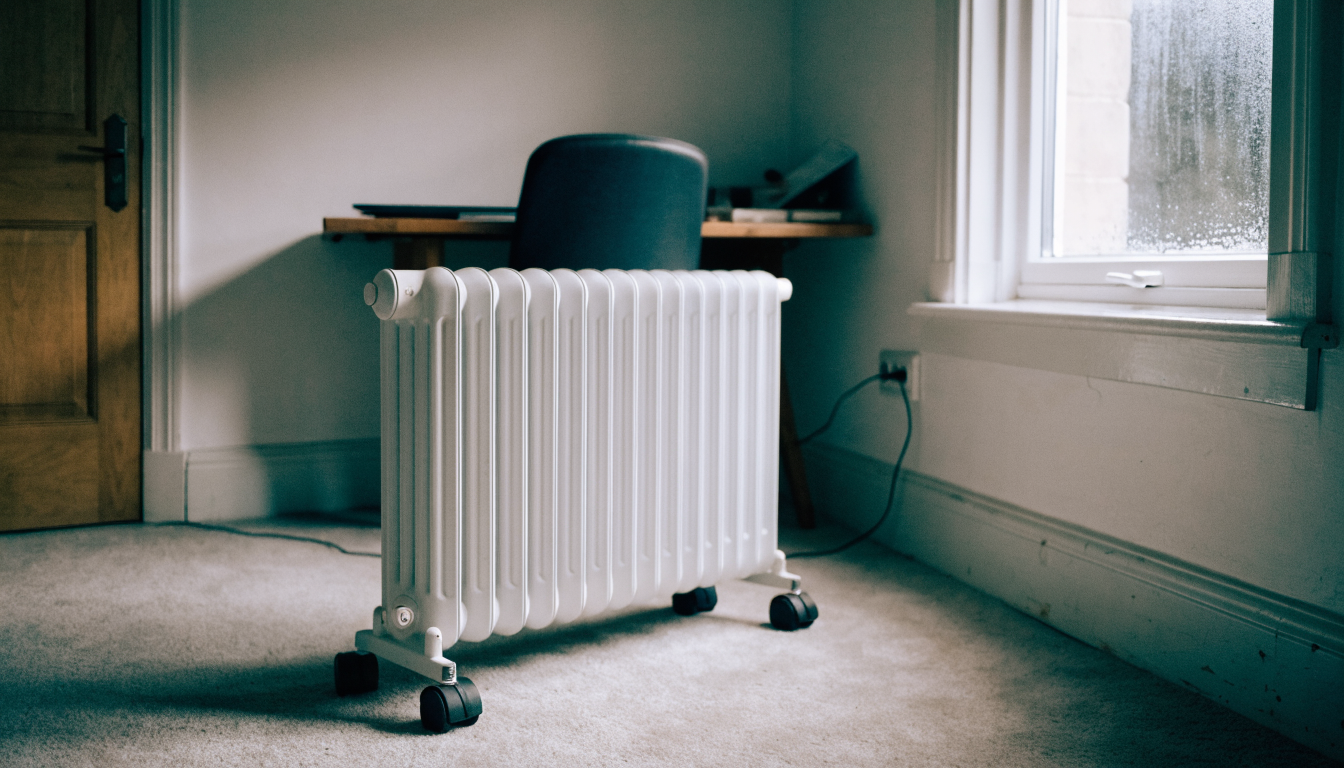
The picks at a glance
- Pro Breeze 11-Fin 2500W, best overall for most rooms
- De'Longhi Dragon 4 Pro TRDX41025E, best for a large or cold room
- Dreo 9-Fin 2000W, best controls and the one worth paying for
- Pro Breeze OmniWarm Smart 2500W, best if you want app and schedule control
- Russell Hobbs RHOFR5002 2000W, best cheap 2kW unit
- 800W 5-Fin Mini, best for a box room, desk or campervan
| Product | Best for | Max output | Fins | Timer | Thermostat | Buy |
|---|---|---|---|---|---|---|
Best overall Pro Breeze 11-Fin 2500W | Living rooms up to about 25 sq m | 2,500W | 11 | 24-hour mechanical | Rotary dial | Check price on Amazon |
Best for large rooms De'Longhi Dragon 4 Pro TRDX41025E | Large or draughty rooms | 2,500W | Chimney-vented column | 24-hour digital | Digital with ECO | Check price on Amazon |
Best controls Dreo 9-Fin 2000W | Bedrooms and home offices | 2,000W | 9 | 24-hour digital | Digital, 1 degree steps | Check price on Amazon |
Best smart control Pro Breeze OmniWarm Smart 2500W | Scheduling from your phone | 2,500W | 11 | 24-hour via app | Digital, app controlled | Check price on Amazon |
Best budget 2kW Russell Hobbs RHOFR5002 2000W | Spare rooms up to about 20 sq m | 2,000W | 9 | None | Rotary dial | Check price on Amazon |
Best for small rooms 800W 5-Fin Mini | Box rooms, desks, campervans | 800W | 5 | None | Rotary dial | Check price on Amazon |
What an oil filled radiator actually costs to run
This section comes before the recommendations because for most people it is the part that decides whether to buy one at all.
Under the Ofgem price cap for 1 October to 31 December 2026, electricity on a direct debit tariff in England, Scotland and Wales costs 26.32p per kWh, with a daily standing charge of 54.83p. The standing charge does not change what the heater costs you, because you pay it whether the heater is switched on or not. Only the unit rate matters here.
The sum for any electric heater is the same one: kilowatts multiplied by hours multiplied by the unit rate. A 2kW heater running flat out for one hour uses 2 kWh, and 2 x 26.32p is 52.64p.
What one real evening costs, with the workings
The table above is the number the retailers quote and it is misleading, because a working thermostat cuts the element out once the room reaches the set temperature and cuts it back in when the room drops. The heater spends most of the evening off.
Here is a 2kW unit in an average spare bedroom from 6pm to 11pm. It runs flat out for the first half hour to bring the room up, then cycles. I have assumed it is calling for heat about half the time after that, which is typical for a reasonably insulated room but is an assumption, not a published figure. A draughty room with single glazing will sit higher, a small well-insulated one lower.
The efficiency claim on the box is meaningless
An oil-filled radiator converts 100% of the electricity it draws into heat in your room. This is presented in marketing copy as an advantage. It is not, because every electric resistance heater does exactly the same thing. A fan heater is 100% efficient. A convector panel is 100% efficient. A halogen bar is 100% efficient. There is nowhere else for the energy to go.
So when a listing says an oil-filled radiator is more efficient or cheaper to run than another electric heater, it is describing a difference that does not exist. One kilowatt-hour in, one kilowatt-hour of heat out, on all of them.
The single exception is a heat pump, which does not make heat, it moves heat that already exists outside into the house. That is how it delivers more heat energy than the electrical energy it consumes. No plug-in heater does this.
What genuinely varies between electric heaters is how the heat is delivered and how well you can stop paying for it. An oil-filled radiator warms slowly, holds that warmth in the oil and keeps releasing it for a while after switch-off, and does it silently. A fan heater dumps heat into the room in ninety seconds and stops dead when you switch it off. Neither is cheaper per unit. They just behave differently.
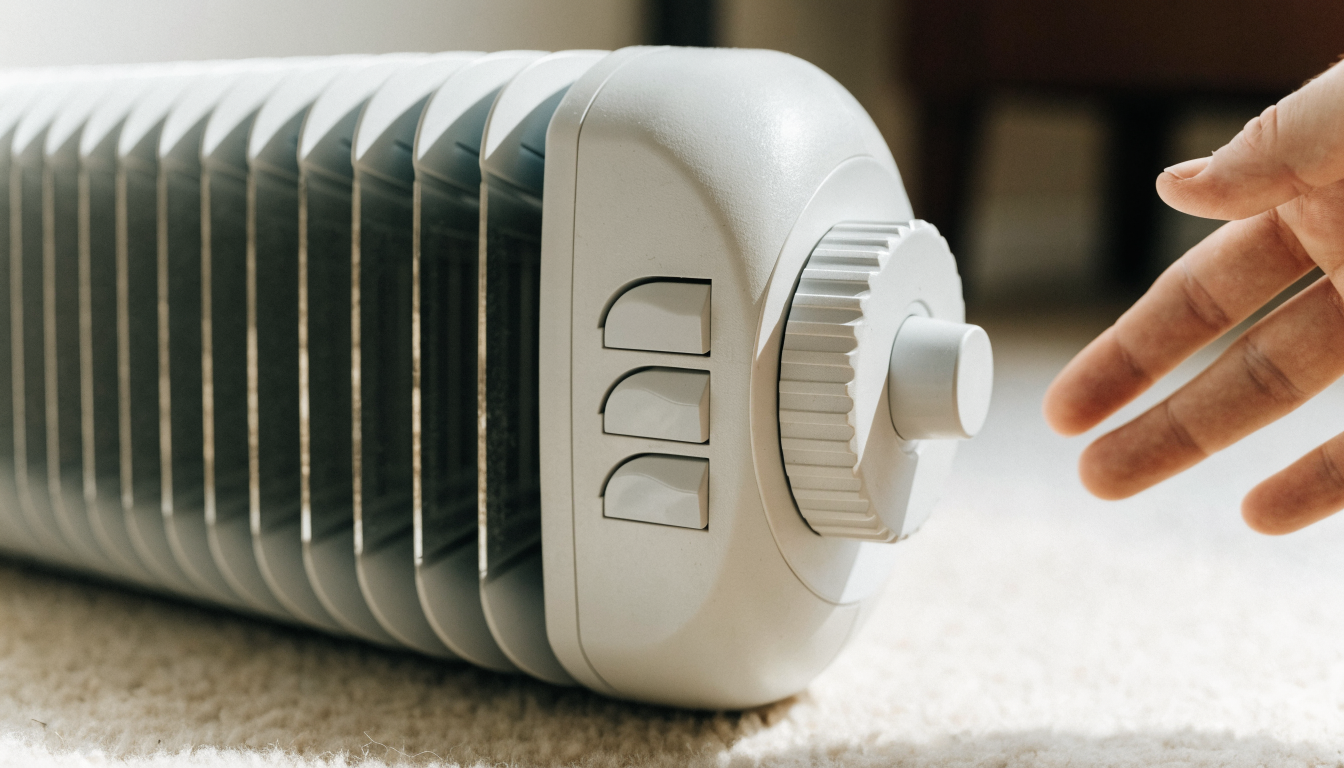
Electricity against gas, per unit of heat delivered
Under the same cap period, gas costs 7.97p per kWh. That is not a like-for-like comparison, because a gas boiler does not turn all of it into useful heat, while an electric heater does. A modern condensing boiler in reasonable condition runs at roughly 90% seasonal efficiency, so the honest sum divides the gas rate by that.
Where an oil filled radiator genuinely beats the central heating
Three times the unit rate still wins if it lets you avoid heating seven rooms you are not in. That is the whole case for these heaters, and it is a real one.
Say your boiler is holding the house at temperature drawing 8kW of gas. That is 8 x 7.97p, or 64p an hour. The 2kW oil-filled radiator cycling at half duty in the one room you are sitting in uses 1 kWh an hour, which is 26p an hour. The heater wins comfortably, despite costing three times as much per unit, because you stopped buying heat for the rest of the house.
You can work out your own crossover point. Divide the electricity rate by the gas rate: 26.32 ÷ 7.97 = 3.3. If your boiler holds the whole house on less than about 3.3kW of gas, the central heating is cheaper even for one room. A small, well-insulated modern flat can easily sit under that. A draughty Victorian semi will not come close.
The situations where these units are the right answer are specific:
- One person working from home in one room while the rest of the house is empty all day.
- A conservatory or garden room that was never plumbed into the heating circuit and cannot easily be added to it.
- A spare room used a few evenings a month, where firing the boiler for a guest bedroom is absurd.
- A flat where the boiler heats everything or nothing, with no zoning and no working valves to shut rooms off individually.
- Frost protection in a garage, workshop or holiday let, where a low setting on a timer costs very little and prevents a burst pipe.
Before you buy on the strength of that fourth one, check whether the problem is actually zoning. The number of people who came to the counter convinced they needed a bigger radiator, when the room was cold because a valve had seized shut and nobody had touched it in six years, was considerable. A working thermostatic radiator valve on every rad gives you room-by-room control for a fraction of what a season of electric heating costs, and a seized one is a ten-minute job to free off. If one room in particular is cold, work through the common radiator problems first, and if the rad is cold at the top, bleeding it may be all it needs. Reflector panels behind the radiator are another cheap thing to try on an external wall before you commit to a plug-in heater.
Where an oil filled radiator is the wrong answer
Buying three or four of them to heat a whole house because the boiler has failed is the expensive mistake. At three times the gas rate, a house that costs £4 a day to heat on gas will cost something close to £12 a day on electric heaters. If the boiler is the problem, that arithmetic is worth putting against the repair quote, and it is worth knowing how long a boiler should last before you accept that replacement is inevitable.
They are also wrong for a room you want warm in five minutes. Oil-filled radiators take twenty minutes or more to get going, because the element has to heat the oil before the oil heats the fins and the fins heat the air. If you want instant heat at a desk, a fan heater or a radiant bar does that job better and costs no more per unit.
And they are wrong in a bathroom. A standard portable oil-filled radiator carries no meaningful IP rating and must not be used where it can be splashed, which rules out bathrooms and wet rooms entirely. That is a safety rule, not a preference.
What wattage you need for your room
The usual rule of thumb for electric heating as a room's only heat source is about 100 watts per square metre of floor area, in a room with average insulation and a standard 2.4m ceiling. Treat it as a starting point, not a calculation. A room with a large single-glazed window, an uninsulated external wall or a high ceiling needs more, sometimes a lot more.
| Room size | Typical example | Target output | Cost per hour at full |
|---|---|---|---|
| 6 sq m | Box room, small study | 600W | 15.8p |
| 10 sq m | Single bedroom | 1,000W | 26.3p |
| 12 sq m | Home office, small double | 1,200W | 31.6p |
| 15 sq m | Double bedroom | 1,500W | 39.5p |
| 20 sq m | Small living room | 2,000W | 52.6p |
| 25 sq m | Large living room, conservatory | 2,500W | 65.8p |
Why a 2kW unit in a small room just cycles
There is a persistent belief that buying the biggest heater is the safe option, because you can always turn it down. In a small room, it is not quite that simple.
Put a 2kW radiator in a 6 square metre box room and it reaches the thermostat setting in a few minutes, cuts out, coasts, and cuts back in. You get noticeable temperature swings between too warm and cooling off, more of the expansion clicking that people mistake for a fault, and a large heavy object taking up a corner of a small room.
What you do not get is a higher bill. This is the part worth being clear about, because plenty of pages get it wrong: the wattage on the box is the maximum draw, not the running cost. A 2kW heater cycling on and off to hold a small room at 20 degrees uses roughly the same energy as a 1kW heater running more steadily to hold the same room at the same temperature, because both are replacing the same heat loss. Oversizing costs you comfort and floor space, not money.
Undersizing is the one that actually hurts. An 800W unit in a 20 square metre living room never reaches the set temperature, so the thermostat never cuts out, so it runs continuously all evening and still leaves you cold. That is the worst of both outcomes.
The six oil filled radiators worth buying
Two of the six are Pro Breeze and two are De'Longhi, which needs explaining rather than glossing over. Those two brands dominate what is actually buyable at sensible money on Amazon UK in this category, and between them they cover the useful range from a basic mechanical 2.5kW unit to a digitally controlled column heater. The other three are there because they fill gaps the two big brands do not: precise digital control at 2kW, a genuinely cheap 2kW unit, and something small enough for a desk.
1. Pro Breeze 11-Fin 2500W, best overall
#1 Best overall
Pro Breeze Oil Filled Radiator, 11 Fin 2500W
- 2,500W across three heat settings (1,000W, 1,500W, 2,500W)
- Built-in 24-hour mechanical timer with segment tabs
- Adjustable rotary thermostat
- 11 fins on castors, with a cable tidy and carry handle
- Overheat cut-off and tip-over switch
Pros
- The timer is the reason to buy it, and it is the thing missing from most units at this money
- Three settings mean you can run it at 1kW in a small room without it cycling hard
- Slim for an 11-fin unit, so it fits behind a sofa or under a window
- The most reviewed oil-filled radiator on Amazon UK by a wide margin, so faults would be well documented by now
Cons
- The mechanical timer only repeats the same pattern every 24 hours, so weekdays and weekends cannot differ
- No digital temperature readout, so setting a specific room temperature is guesswork on the dial
- At 2.5kW it is more heater than a bedroom needs, and oversized units swing between warm and cool
- Heavy to carry up stairs, as all 11-fin units are
The sensible default. The 24-hour timer does more for your bill than any amount of fin count, and this is the cheapest reliable way to get one. Size it down to the 1,000W setting for a bedroom rather than buying a smaller unit.
If you take one thing from this page, it is that a timer saves more money than a spec sheet. A heater that switches itself off at 11pm and back on at 6am cannot be left running by accident, and on the arithmetic above that is the difference between roughly £218 and roughly £395 over a season.
2. De'Longhi Dragon 4 Pro TRDX41025E, best for a large or cold room
#2 Best for large rooms
De'Longhi Dragon 4 Pro TRDX41025E Oil Filled Radiator, 2500W
- 2,500W with three heat settings and a digital thermostat
- Chimney-effect vented column design that draws air up through the fins
- 24-hour digital timer and ECO setting
- Anti-frost function that holds the room just above freezing
- Pre-fitted easy-roll castors and a thermal cut-off
Pros
- The vented chimney design moves warm air around a large room faster than a plain fin stack
- Digital thermostat lets you set an actual temperature rather than a dial position
- Anti-frost mode is genuinely useful in a garage, workshop or holiday let
- De'Longhi has been making these longer than anyone and parts and support are easy to find
Cons
- Consistently the most expensive unit here, often by a factor of two or three
- The chimney vents collect dust and need vacuuming out, which a sealed fin stack does not
- Physically large and heavy, so it is not a heater you move between rooms casually
- The digital panel is one more thing that can fail on an appliance whose appeal is simplicity
The one to buy if the room is genuinely large, cold or badly insulated and the cheaper units have already disappointed you. In a normal bedroom it is money spent on capacity you will never use.
3. Dreo 9-Fin 2000W, best controls

#3 Best controls
Dreo 9-Fin Oil Filled Radiator, 2000W
- 2,000W with a digital thermostat adjustable in 1 degree steps
- 24-hour timer and an ECO mode that steps the output down as the room warms
- Child lock and a burn-resistant plug
- Overheat and tip-over protection
- LED display with a remote control
Pros
- Setting an actual target temperature rather than a dial position is the single most useful control feature on any of these
- The 1 degree steps mean you can find the setting where the room is comfortable and stop there, which is where the savings are
- Quiet in use, with no fan
- Child lock matters if the heater lives in a room a toddler uses
Cons
- The LED display is bright enough to be noticeable in a bedroom at night
- More electronics than a simple unit, so more to go wrong outside the warranty
- 2,000W is more than a small bedroom needs
- Remote controls on heaters get lost within a fortnight in most households
The best-controlled unit here and the one to choose for a bedroom or home office where you want the room held at a specific temperature rather than roughly warm.
4. Pro Breeze OmniWarm Smart 2500W, best for scheduling
#4 Best smart control
Pro Breeze OmniWarm Smart 2500W, 11 Fin Oil Filled Radiator
- 2,500W with three heat modes and a digital thermostat
- WiFi app control with scheduling from your phone
- 24-hour timer, child lock and touch panel
- Eco mode that modulates output as the room reaches temperature
- Overheat cut-off and tip-over protection
Pros
- App scheduling is the practical version of a timer, because you can change it without crouching at the heater
- Being able to switch it on from elsewhere in the house means the room is warm when you get to it, not twenty minutes after
- Same 11-fin body and output as the standard Pro Breeze, so the heating performance is a known quantity
- Eco mode reduces the hard on-off cycling that makes oversized units uncomfortable
Cons
- A WiFi heater depends on an app and a cloud service that may not outlive the heater
- Meaningfully more expensive than the non-smart version of the same unit
- Fewer reviews than the standard model, so long-term reliability is less well evidenced
- The touch panel is harder to operate in the dark than physical switches
Worth the premium only if you will genuinely use the scheduling. If the plan is to switch it on and off by hand anyway, buy the standard Pro Breeze and spend the difference on nothing.
5. Russell Hobbs RHOFR5002 2000W, best budget 2kW

#5 Best budget 2kW
Russell Hobbs RHOFR5002 Oil Filled Radiator, 9 Fin 2000W
- 2,000W across three heat settings (800W, 1,200W, 2,000W)
- Adjustable rotary thermostat
- 9 fins, carry handles and castors
- Rated by Russell Hobbs for rooms up to 20 square metres
- Safety cut-off and a 2-year guarantee
Pros
- The 800W setting is genuinely useful, and a lot of budget units jump straight from 1kW to full output
- A 2-year guarantee is longer than several pricier units here offer
- Simple mechanical controls with nothing to fail electronically
- Light enough for one person to move between rooms
Cons
- No timer at all, which on the arithmetic in this guide is the costliest omission on the page
- The rotary thermostat is a dial with no markings, so finding a repeatable setting takes trial and error
- 1.45m cable is short and will often need repositioning rather than an extension lead
- Some owners report a persistent click as the fins expand and contract
The right choice if the budget is tight and you will be in the room to switch it off. Pair it with a plug-in mechanical timer switch, which costs a few pounds and buys back the missing feature.
6. 800W 5-Fin Mini, best for a box room or a desk

#6 Best for small rooms
5-Fin Mini 800W Portable Oil Filled Radiator
- 800W single output with an adjustable thermostat
- 5 fins, small enough to sit under a desk or beside a bed
- Roller wheels fitted, no assembly needed
- Thermal cut-off
- Runs from a standard 13A socket with no installation
Pros
- 21.1p an hour at full output is the cheapest running cost on this page by a distance
- Correctly sized for a box room or study at the 100W per square metre rule of thumb
- Small enough to live permanently under a desk without being in the way
- Popular for campervans and small cabins where a 2kW unit would trip the supply
Cons
- 800W will not heat a living room, and used in one it simply runs continuously without getting there
- No timer and no digital display
- Single output setting, so the thermostat is the only control you have
- Small oil volume means it also loses its residual warmth faster after switch-off than a larger unit
Buy it for the room it suits and it is the cheapest thing here to run. Buy it for a room it does not suit and it will disappoint you every evening while still costing you money.
Oil filled against convector, fan and halogen
All four cost the same to run per unit of heat. What follows is a comparison of behaviour, not of efficiency, because there is no efficiency difference to compare.
| Type | Time to warm a room | Heat after switch-off | Noise | Best for |
|---|---|---|---|---|
| Oil-filled radiator | 20 to 30 minutes | Yes, 20 to 40 minutes of residual warmth | Silent apart from expansion clicks | Holding a room warm for several hours |
| Convector panel | 5 to 10 minutes | Almost none | Silent | Wall-mounted background heat in a hallway or spare room |
| Fan heater | 1 to 2 minutes | None | Noticeable, constant fan | Short bursts, getting a cold room usable fast |
| Halogen or radiant bar | Instant on the person, never on the room | None | Silent, occasional tick | Warming one seated person, not a space |
The practical reading of that table is this. If you sit in the same room for four or five hours, the oil-filled radiator's slow, steady, silent heat is the most comfortable of the four, and the residual warmth means you can switch it off twenty minutes before you leave. If you are in and out of a cold room for ten minutes at a time, a fan heater will cost you less in practice, because the oil-filled unit spends its whole life warming up and never reaches the point where it earns its keep.
What these cost away from Amazon
Amazon prices are not published on this site, because Amazon only permits prices pulled live through its own API. Other retailers can be quoted, and it is worth doing, because the spread on identical units is remarkable.
Checked on 18 September 2026, the De'Longhi Dragon 4 2.5kW was listed across UK sellers at £165.99 at Aircare Appliances, £199.99 through Shopping FM, £219.99 direct from De'Longhi UK, £240.00 at Argos and £244.98 at ManoMano, with one OnBuy listing for the same family of unit at £378.39. That is the same heater at more than double the price depending on where you click. Prices at this time of year move week to week as stock clears, so treat those as a snapshot rather than a standing quote.
It is also worth checking the trade and DIY sheds before you assume Amazon is cheapest, particularly in October when seasonal stock lands. Screwfix, Toolstation, B&Q and Wickes all stock them seasonally. I have not quoted their prices here because I have not verified them today, and an unverified price is worse than no price.
What goes wrong with them over time
These are simple appliances with few failure modes, and the ones they do have are predictable.
One thing these units never need is maintenance. There is no oil to change, no fluid to top up and no service interval. If a listing offers you an oil-filled radiator that can be refilled, it is not a sealed domestic unit and you should look at what you are actually buying.
Frequently asked questions
How much does a 2000W oil-filled radiator cost to run?
At the Ofgem cap rate of 26.32p per kWh for 1 October to 31 December 2026, a 2,000W unit costs 52.6p an hour at full output. In practice it does not run at full output all evening, because the thermostat cuts it in and out. A realistic five-hour evening in an average spare bedroom works out at around 5.5 kWh, or about £1.45. Anyone quoting you a single fixed figure without stating the duty cycle is guessing.
Do oil-filled radiators use a lot of electricity?
They use exactly as much as any other electric heater of the same wattage doing the same job. A 2kW oil-filled radiator and a 2kW fan heater holding the same room at the same temperature use the same electricity. Compared with gas central heating they are expensive, at roughly three times the cost per unit of heat delivered. Compared with heating a whole house you are not using, they can be much cheaper.
Is it cheaper to leave an oil-filled radiator on all the time?
No. This is the most persistent myth in domestic heating and it is wrong for the same reason in every case. A room loses heat to the outside in proportion to how much warmer it is than outside. Keep the room warm for 24 hours and you pay for 24 hours of that heat loss. Keep it warm for five hours and you pay for five, plus a small warm-up penalty that is nowhere near the difference. Leaving it on is always more expensive. Use the timer.
What are the downsides of an oil-filled radiator?
They are slow to warm up, taking twenty minutes or more before the room feels different. They are heavy, at 12 to 20kg for a 2kW unit. They cannot be used in bathrooms. The castors break if you drag them. And they carry no efficiency advantage whatsoever over any other electric heater, despite what the packaging suggests. Against all that, they are silent, they hold heat after switch-off, and their surface temperature is low enough to be safer around children than a radiant bar.
Which brand is best for an oil-filled heater?
De'Longhi has the longest track record and the widest range, and its Dragon 4 units are the ones to look at for a large room. Pro Breeze dominates the mid-market on Amazon UK and includes timers on units where rivals do not. Beyond those two the brand matters less than the specification: a cheap unit with a timer and a usable thermostat will cost you less to run than an expensive one without them, because the controls are where the money is saved.
Can I use an oil-filled radiator in a bathroom?
No. Standard portable oil-filled radiators are not IP-rated for wet zones and must not be used anywhere they can be splashed. A bathroom needs a fixed heater with an appropriate IP rating, wired in by a qualified electrician, not a plug-in appliance on a trailing lead.
How long should an oil-filled radiator last?
There is no published industry figure and anyone quoting you one has made it up. What can be said is that the sealed body has nothing to wear out, so the things that end these heaters are the thermostat, the switches, the cable and the castors. Guarantees on the units in this guide run to two years. Beyond that, the honest position is that a sealed unit treated gently may run for many seasons, and a leaking one is scrap on the day it starts.
Related guides
- What is a thermostatic radiator valve, the cheapest way to get room-by-room control before you buy a plug-in heater
- Common radiator problems, for working out why one room is cold when the rest of the house is fine
- How to bleed a radiator, and how to tell whether bleeding will fix anything
- How to repressurise a boiler, if the heating has stopped working and you are reaching for an electric heater as a stopgap
- How to remove a radiator, for decorating or replacing one that has never worked properly





0 Comments