
As an Amazon Associate I earn from qualifying purchases.
A dehumidifier will help with mould caused by condensation, and it will do nothing at all for mould caused by rising damp, penetrating damp or a leak. That is the whole answer, and it is why the first job on this page is working out which of those you have, because buying a dehumidifier for a failed damp proof course is money spent on the wrong machine.
Look at who ranks for this question and the reason the honest version is hard to find becomes obvious. The pages are written by appliance retailers, dehumidifier manufacturers and mould remediation firms, and almost none of them are British. None of them has a reason to tell you that the moisture is coming from your bathroom door being left open, or that an extractor fan costing a fifth as much would deal with the cause instead of the symptom.
Three things on this page the others leave out. A dehumidifier does not kill the mould already on your wall, it only removes the conditions that let more of it grow. The litres a day figure on the box is measured at 30°C and 80% relative humidity, which is nothing like a British bedroom in November, so you will never collect it. And the running cost everyone quotes is about to change: the electricity unit rate under the price cap rises from 26.32p to 32.69p per kWh on 1 January 2027, which puts roughly a quarter on every figure below.
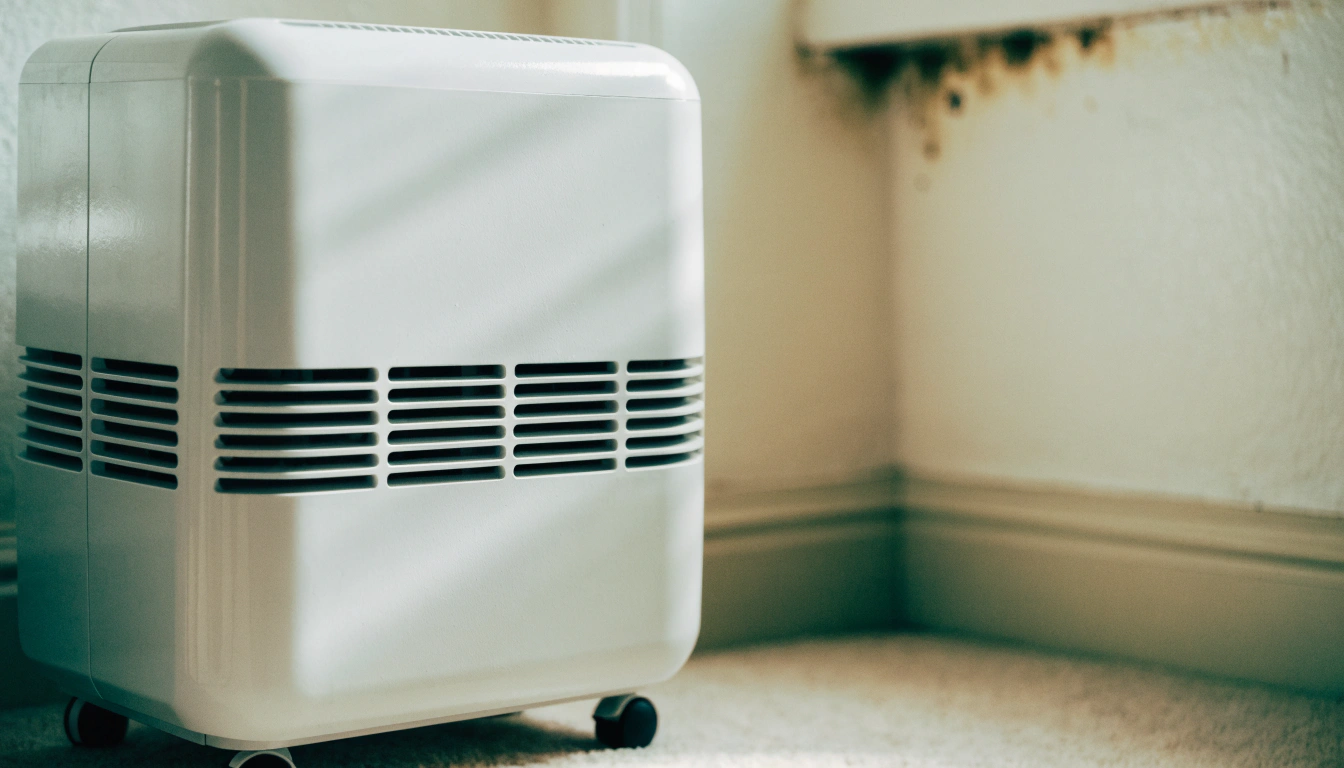
First work out which kind of damp you have
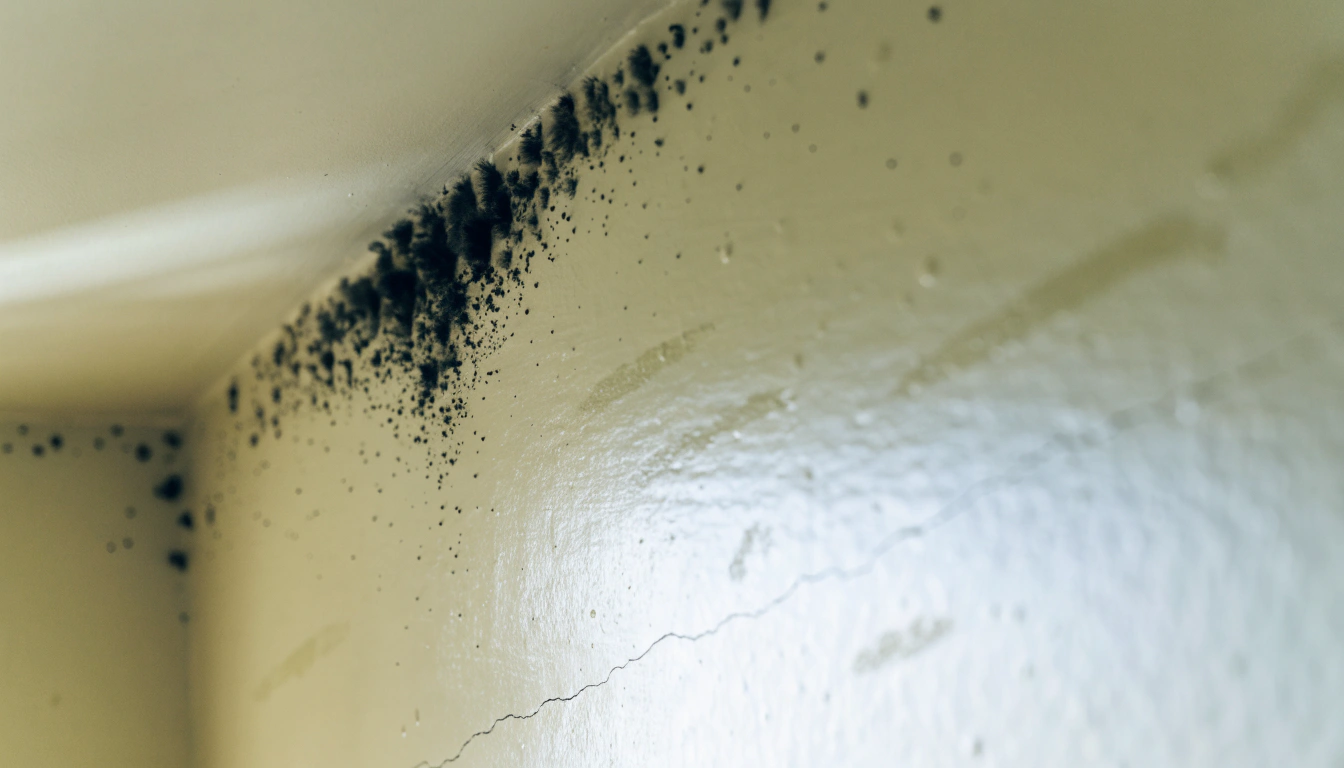
Every useful decision about mould follows from this and nothing else. The mould itself looks much the same whatever put the water there, so you cannot tell by looking at the mould. You tell by looking at where it is, what shape it is, and when it appears.
If you are not sure after that, spend a few pounds before you spend a few hundred. A cheap hygrometer in the affected room, compared against one in a room with no problem, tells you whether the air in that room is genuinely wetter or whether the wall is just colder. That distinction decides the whole purchase.
What a dehumidifier actually does, and what it does not
A dehumidifier pulls room air across a cold surface or a moisture absorbing wheel, drops the water out of it into a tank, and returns drier air to the room. That is the entire mechanism. It lowers relative humidity, which raises the margin between the air and the dew point of your coldest wall, which is what stops new mould establishing.
What it does not do is remove the mould you can already see. Drying the room out stops that colony growing, but the staining stays on the paint and the growth is still there on the plaster waiting for the next wet spell. Removing it is a separate job with a separate product, and it has to be done as well, not instead.
A fungicidal mould remover, left in contact for the time on the label, then wiped off. Needed whether or not you buy a dehumidifier, because drying a room does not clean a wall.
Lower the humidity, raise the surface temperature, or both. A dehumidifier is one way to do the first. An extractor fan, open trickle vents and steady heating are the others, and they are usually cheaper.
What a dehumidifier costs to run, and why that figure changes in January
This is the section the retailer pages skip, and it is the one most likely to change your mind. The arithmetic is simple enough to do yourself: rated watts divided by 1,000, multiplied by hours run, multiplied by the unit rate.
Under the Ofgem price cap the average electricity unit rate for a direct debit customer in England, Scotland and Wales is 26.32p per kWh from 1 October to 31 December 2026, and 32.69p per kWh from 1 January to 31 March 2027. That is a rise of just over 24%, and it lands in the middle of the season you would be running the thing. Both figures are used below.
Worked example, taking the MeacoDry Arete One 12L at its published 151 W, run eight hours a day. 151 ÷ 1,000 = 0.151 kW. 0.151 × 8 = 1.208 kWh a day. 1.208 × 26.32p = 31.8p a day now, and 1.208 × 32.69p = 39.5p a day from January.
| Unit and setting | Rated power | Per day, 8 hours, at 26.32p | Per day, 8 hours, at 32.69p | 120 day winter, at 32.69p |
|---|---|---|---|---|
| Bathroom extractor fan, 1 hour a day | 5 W | 0.13p | 0.16p | 20p |
| MeacoDry Arete One 12L, compressor | 151 W | 31.8p | 39.5p | £47.39 |
| EcoAir DD1 Simple MK3, low | 300 W | 63.2p | 78.5p | £94.15 |
| EcoAir DD1 Simple MK3, high | 580 W | £1.22 | £1.52 | £182.02 |
The number worth sitting with is the gap between the top and bottom rows. A 5 W extractor fan running an hour a day costs about 60p a year and removes the moisture before it ever reaches the bedroom wall. A desiccant dehumidifier on high costs more than £180 across one winter to take the same moisture back out of the air after it has spread through the house. One of those is dealing with the cause.
Extraction rate and room size: the litres a day figure is not what you will collect
Dehumidifiers are sold by litres a day, and almost everybody reads that as the amount of water the machine will take out of their room. It is not. It is the result of a test run in a chamber held at a fixed temperature and humidity, and the manufacturers do not all use the same chamber.
Meaco publish their extraction figures at 30°C and 80% relative humidity, and say openly on their own blog that other brands use 32°C and 90 or 95% to produce a larger number. They also say a realistic European room sits nearer 20°C and 60%, and that they would prefer that as the standard. A British bedroom in November is colder and drier than any of those test chambers, so a 12 litre machine will not collect 12 litres.
Two machines rated at 12 litres and 7.5 litres are not necessarily 60% apart, because compressor and desiccant units are commonly quoted against different test conditions. Compare the rated wattage, the tank size and the warranty, which are measured the same way by everyone. Treat the litres a day figure as a rough size band, not as a specification you can do arithmetic with.
How to size one without guessing
Size by the job rather than by the floor area, because the floor area tells you very little about how much water is being produced in the room.
A 10 to 12 litre compressor unit, run on a humidistat so it shuts off when the room reaches target rather than running all night. This is the common case and the cheapest to run.
A unit with a laundry mode, used in one closed room with the door shut, rather than a machine wandering round the house behind an airer. Containing the moisture to one room is most of the benefit.
A desiccant unit, because a compressor loses output badly as the air gets cold and a desiccant does not. Accept that it costs roughly twice as much to run.
Stop and reconsider. Damp in every room is a ventilation problem or a building fault, and a portable unit moved from room to room is a very expensive way to not fix it.
Desiccant or compressor, and why it matters in a cold UK room
These are two different machines doing the same job by different physics, and the choice turns almost entirely on how warm the room is.
| Compressor (refrigerant) | Desiccant | |
|---|---|---|
| How it works | Condenses water out of the air on a cold coil, like a fridge | Absorbs water into a rotating wheel, then drives it off with a heater |
| Best in | Heated rooms, roughly above 15°C | Cold rooms: garages, conservatories, boats, unheated utilities |
| Output as the room gets colder | Falls away sharply | Largely unaffected |
| Typical rated power | Lower. 151 W on the Meaco unit below | Higher. 300 W to 580 W on the EcoAir unit below |
| Running cost over a winter | Lower, and that is the main reason to choose one | Roughly twice as much on low, nearly four times on high |
| Side effect | Neutral | Puts out slightly warmed air, which is welcome in a garage |
The practical rule: if the room has a radiator in it and the radiator is on, buy a compressor unit. If it does not, buy a desiccant one and accept the electricity. Buying a desiccant unit for a normally heated bedroom because it was cheaper in the shop is the mistake that costs the most over five winters.
What to buy, in the order you should buy it
These are judged on published specification, manufacturer documentation and sixteen years of selling to and arguing with trade customers across a merchants counter, not on hands-on testing. I have not run these units in my own house and will not pretend otherwise.
Buy this before you buy a dehumidifier
The thing that came through the merchants door most often was somebody buying the second item on the list because they had not bought the first one. A hygrometer costs less than a round of drinks and tells you whether you have a humidity problem at all, or a cold wall problem, which needs a different answer entirely.
#1 Measure before you spend
TempPro TP49 Digital Hygrometer and Room Thermometer
- Shows relative humidity and room temperature
- Small enough for a windowsill, a bedside table or behind a wardrobe
- Battery powered, nothing to wire in or set up
Pros
- Turns a guess about which room is damp into a reading you can compare
- Lets you check whether a change you made actually moved the number
- Cheap enough to buy two or three and compare rooms on the same day
Cons
- Budget sensors drift and are not laboratory accurate, so treat differences of a few percent as noise
- No logging, so you only ever see the reading at the moment you look at it
- One on its own tells you much less than two in different rooms
Buy one, or better two, and leave them a day before reading them. If the problem room reads 70% while the rest of the house reads 50%, the air in that room is genuinely wetter and a dehumidifier has something to work on. If both read the same, your problem is a cold surface, and the answer is insulation and heat rather than an appliance.
For condensation mould in a heated house
#2 Best for a heated house
MeacoDry Arete One 12L Dehumidifier and HEPA Air Purifier
- 12 litres a day rated extraction
- 151 W rated power
- 2.5 litre tank
- Laundry mode for drying washing in one closed room
- Five year warranty
Pros
- 151 W is genuinely low for this size of unit, and power is what the winter running cost turns on
- A five year warranty is unusually long in a category where three is normal
- Laundry mode aims at the single largest moisture source in most households
- Quiet enough at its night setting to be tolerable in a bedroom, which matters because bedrooms are where the mould is
Cons
- Output falls off in a cold room, so this is the wrong machine for a garage or an unheated conservatory
- The 12 litre rating is a chamber figure at 30°C and 80% humidity and you will collect nothing like it in a November bedroom
- A 2.5 litre tank needs emptying daily when the room is genuinely wet
- Still costs around £47 across a winter at eight hours a day from January, which is not nothing
- Physically larger than the small desktop units people picture
The right choice for the common case: one or two damp bedrooms in a house that is otherwise heated. Set it on a humidistat at 55% rather than leaving it running flat out, close the door of the room it is working in, and treat it as a holding measure while you sort out the ventilation that caused the problem.
For a cold room a compressor cannot cope with
#3 Best for garages and cold rooms
EcoAir DD1 Simple MK3 Desiccant Dehumidifier
- 7.5 litres a day rated extraction
- 300 W on low, 580 W on high
- 34 dB(A) on the low setting
- 6 kg, so it carries between rooms easily
- Three year warranty
Pros
- Keeps working at temperatures where a compressor unit has effectively given up
- Light enough to move between a garage and a utility room without resenting it
- Returns slightly warmed air, which is a real benefit in an unheated space
- A rotary dial and nothing else, which is a virtue in a cold garage
Cons
- Running cost is the serious drawback: twice the compressor unit on low and nearly four times on high, which the table above prices out
- Draws more power than the Meaco while being rated for less water
- 47 dB(A) on high is noticeably loud
- No humidistat on this model, so it cannot shut itself off when the room reaches target and you have to remember
- Easy to buy by mistake for a heated house, where it is simply the expensive option
Buy this for a garage, a boat, a conservatory or an unheated utility room, and for nothing else. In those places it is the only one of the two that works properly. In a heated bedroom it does the same job as the Meaco for roughly double the electricity, and over five winters that difference is larger than the price of either machine.
When a dehumidifier will not fix it
This is the list the retailer pages do not print, and it covers a great many of the people typing this question into Google.
- Rising damp. A tide mark that stops about a metre up the wall is ground water in the masonry. The damp proof course has failed or been bridged. Drying the air will not pull water back down a wall.
- Penetrating damp. An isolated patch that darkens after rain is water coming through the fabric of the building. The repair is a gutter, a render crack, a pointing joint or a roof tile.
- A leak. Including the slow ones. A weeping joint under a bath or inside a boxed-in pipe run produces a damp patch that behaves like penetrating damp and keeps producing it forever. Our guide to finding a water leak before you pay for a survey is the place to start.
- An extractor fan that is running but moving no air. Extremely common, and it looks exactly like a ventilation problem you cannot explain. A fan with a blocked duct, a stuck backdraught shutter or a crushed flexible hose spins happily and extracts nothing. Check it against our guide to an extractor fan that is not working before buying anything else.
- Mould already on the wall. It needs removing with a fungicidal product. Drying the room stops it spreading and leaves the stain exactly where it is.
- A cold wall rather than wet air. If the hygrometer says the room is at 50% and there is still mould in one corner, that corner is below dew point because it is a cold bridge. Insulation, furniture pulled away from the wall and steady background heat are the levers, not an appliance.
The cheaper fix is usually ventilation
A dehumidifier takes moisture back out of air that has already spread through the house. An extractor fan removes it from the room that produced it, before it gets anywhere, for about 60p a year. Approved Document F sets a minimum intermittent extract rate of 15 l/s for a bathroom and 30 l/s for a kitchen with a hood ducted outside, and a very large number of fitted fans do not reach it. Our guide to the best bathroom extractor fans compares the published extract rates against that minimum.
Trickle vents are the other half of it and they cost nothing, because most houses already have them and somebody has closed them to stop a draught. They are the background air change that stops humidity building up overnight while the house is shut. If your windows stream every morning, the condensation guide works through the order to do these in.
If you rent
Damp and mould growth is a recognised housing hazard rather than a housekeeping matter. It appears as hazard 11 in the Housing Health and Safety Rating System operating guidance, made under section 9 of the Housing Act 2004, and a local council can inspect a property against it.
Social housing tenants in England have a defined route and defined timescales. Under Awaab's Law, a landlord must investigate a reported significant damp or mould hazard within 10 working days, provide a written summary within 3 working days of the investigation finishing, and make the home safe within 5 working days of it finishing. If the landlord's own complaints process does not resolve it, the Housing Ombudsman is the next step. Private tenants should report the problem in writing to the landlord and then to the environmental health team at their local council. Buying a dehumidifier out of your own pocket does not change any of that, and it is worth knowing before you do.
Questions people ask about dehumidifiers and mould
How much does it cost to run a dehumidifier 24 hours a day?
Take the rated watts, divide by 1,000, multiply by 24, multiply by your unit rate. At the 32.69p rate that applies from January, a 151 W compressor unit left on continuously is 3.62 kWh a day, which is £1.18 a day, or about £35 a month. A 580 W desiccant unit on high is 13.92 kWh a day, which is £4.55 a day, or about £136 a month. In practice a unit with a humidistat does not draw full power for 24 hours because it cycles off once the room reaches target, which is the single best argument for buying one that has a humidistat.
Does a dehumidifier kill mould?
No. It removes the moisture the mould needs to keep growing, which stops the colony spreading, but the growth already on the wall stays there and so does the staining. The mould has to be removed separately with a fungicidal product. Treat the dehumidifier as the thing that stops it coming back, not the thing that gets rid of it.
Can mould grow at 20% humidity?
Not on a dry wall, no, and 20% is a very dry room by British standards. The important thing is that the number on your hygrometer is the humidity of the air in the middle of the room, and mould grows at the surface. A cold external corner can be sitting at a far higher relative humidity than the room average because the air touching it is colder. That is why mould appears in corners and behind wardrobes while the hygrometer on the mantelpiece reads something perfectly reasonable.
What relative humidity should I aim for?
Somewhere in the 40% to 55% band is the usual target, and it is what most humidistats are set up around. Chasing a much lower figure costs electricity for very little extra benefit and makes the house feel dry. If you are running a dehumidifier on a humidistat, set it rather than leaving it on continuous, because continuous running is where the cost in the table above comes from.
What temperature should I keep the house at to avoid mould?
There is no single temperature, because what matters is the temperature of the coldest surface rather than the air. The pattern that causes trouble is heating the house hard for two hours in the evening and letting it go cold overnight, because the walls never warm up and the moisture released in the evening condenses on them at three in the morning. Steady background warmth in the rooms that get mould does more than a higher peak temperature. For a cold spare room or a home office, an oil-filled radiator on a low setting is a cheaper way to hold one room above dew point than heating the whole house.
What kills mould spores in the air?
Nothing you can buy for a house does this reliably, and it is the wrong target. Mould spores are present in outdoor and indoor air everywhere, all the time, and no appliance removes them from a room that has a door and a window. What decides whether they turn into a patch on your wall is whether they land somewhere wet. That is why every useful answer on this page is about moisture and surface temperature rather than about spores.
Will a houseplant reduce mould?
No, and it works the other way. Plants release water vapour through their leaves, so a room full of them is adding moisture to the air rather than removing it. The various claims circulating about particular plants removing a specific percentage of airborne mould trace back to sealed chamber experiments that have nothing to do with a ventilated room. If you have a damp bedroom, moving the plants out of it is a small free improvement.
Should I buy a dehumidifier or an extractor fan?
An extractor fan first, in almost every case, because it is a tenth of the price to buy and roughly a hundredth of the cost to run, and it removes the moisture at the point it is produced. A dehumidifier is the right answer when you cannot ventilate: a flat with no external wall in the bathroom, a room you cannot get a duct out of, a rented property where you are not allowed to alter anything, or a specific problem like drying washing indoors in winter. Buy both if the house produces a lot of moisture and one damp bedroom is still not clearing.
Related guides
- How to stop condensation on windows: where the twelve litres of water a day in your house actually comes from, and the fixes in the order that works.
- The best bathroom extractor fans: which units genuinely clear the 15 l/s Part F minimum, and why the famous quiet-running claim belongs to a slower speed.
- Getting rid of black mould in the bathroom: for when the growth is on tiles, grout and painted bathroom walls rather than a bedroom corner.
- Removing black mould from silicone sealant: the one surface where cleaning often fails completely, because the growth is inside the bead rather than on it.
- How to balance radiators: how to stop one bedroom running cold while the rest of the house cooks, because the cold room is where the mould turns up.



0 Comments